"I need a truck" is not a spec. US truckload (FTL) shipping runs on more than a dozen trailer configurations, and each one is built for a different combination of weight, height, loading method, and cargo type. Pick the wrong one and your quote will be wrong — or the driver will show up and the load simply will not fit.
This guide walks through the equipment families that actually move freight on US highways: enclosed vans, flatbed family (standard, step deck, double drop, lowboy, RGN, tilt), power only, hotshot, and liftgate box trucks. For each one: typical dimensions, legal weight capacity, and the cargo it is actually built for.
How to pick: 4 questions before you quote
- Weight and dimensions — total weight, and does any single piece exceed 8'6" wide, 8'6" tall, or 53' long?
- Loading method — forklift/dock from the rear (van), crane or side-load (flatbed), or drive-on under its own power (RGN/tilt)?
- Height clearance — the legal max for a loaded trailer is 13'6" overall in most states. A tall piece of equipment may only fit on a lower deck, not a standard one.
- Weather exposure — anything that cannot get wet or dusty needs an enclosed van, not an open-deck flatbed.
53' Dry Van — the default for palletized freight
The enclosed dry van is the default equipment for US long-haul truckload: general dry goods, cartons, palletized freight, consumer products, most e-commerce volume.
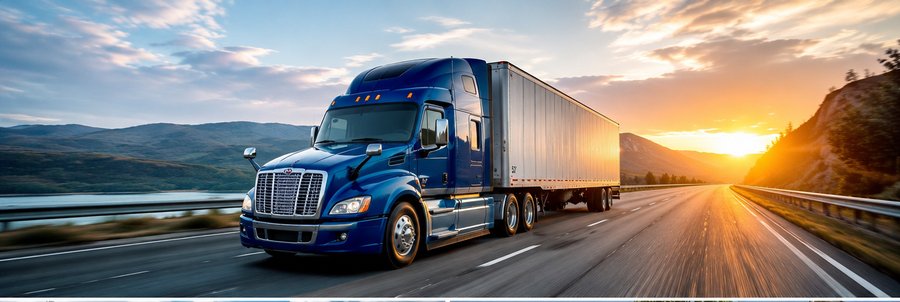
- Interior: approx. 53' long × 99"–102" wide × 110" high (varies slightly by trailer manufacturer)
- Door opening: approx. 98" wide × 110" high — rear-load only
- Legal max weight: 80,000 lbs gross combined (tractor + trailer + cargo); typical cargo payload after tractor/trailer tare weight is roughly 44,000–45,000 lbs
- Typical pallet count: 26 standard 48"×40" pallets floor-loaded, up to 30 if pinwheeled
- Typical cargo: boxed/palletized general merchandise, furniture, electronics, retail and e-commerce goods, anything that needs to stay dry and out of weather
Limitation: a 53' van needs a dock or a liftgate to load/unload, and it cannot reach every address — tight city streets, small warehouses, and no-dock residential sites may need a 26' box truck instead.
Reefer — temperature-controlled freight
Structurally the same enclosed box as a dry van, with a refrigeration unit (reefer unit) mounted on the nose and insulated walls. Built to hold — not necessarily pull down — a set temperature range in transit.
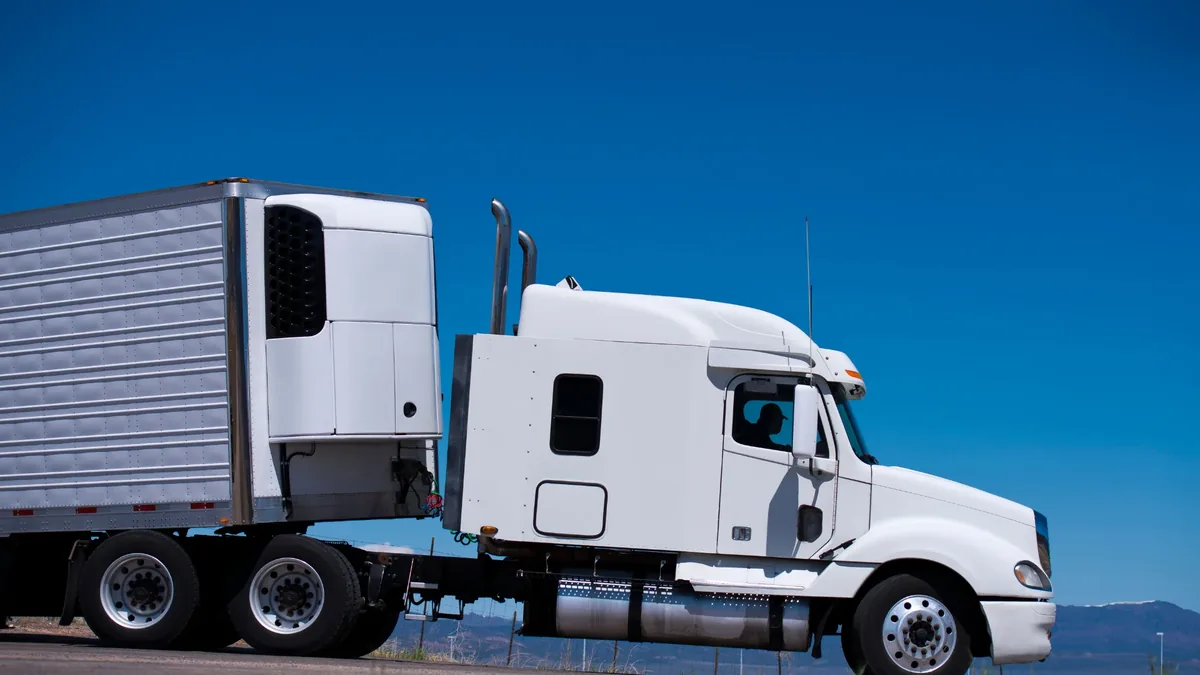
- Interior: slightly smaller than a dry van of the same outer length (insulated walls + reefer unit intrude roughly 2"–4" per side plus several feet at the nose) — roughly 48,000–53,000 lbs gross-equivalent capacity, effective payload usually 42,000–44,000 lbs because the reefer unit itself weighs 1,500–2,000 lbs more than a standard trailer
- Temperature range: typically -20°F to 70°F depending on unit, set and monitored per shipment
- Typical cargo: food and beverage, produce, frozen goods, pharmaceuticals, flowers, anything temperature- or humidity-sensitive
Before quoting a reefer load, confirm: required temperature range, whether pre-cooling is needed before loading, and whether the cargo itself generates heat (produce that is still "breathing" needs airflow, not a sealed-tight load).
Flatbed family — open deck, by deck height
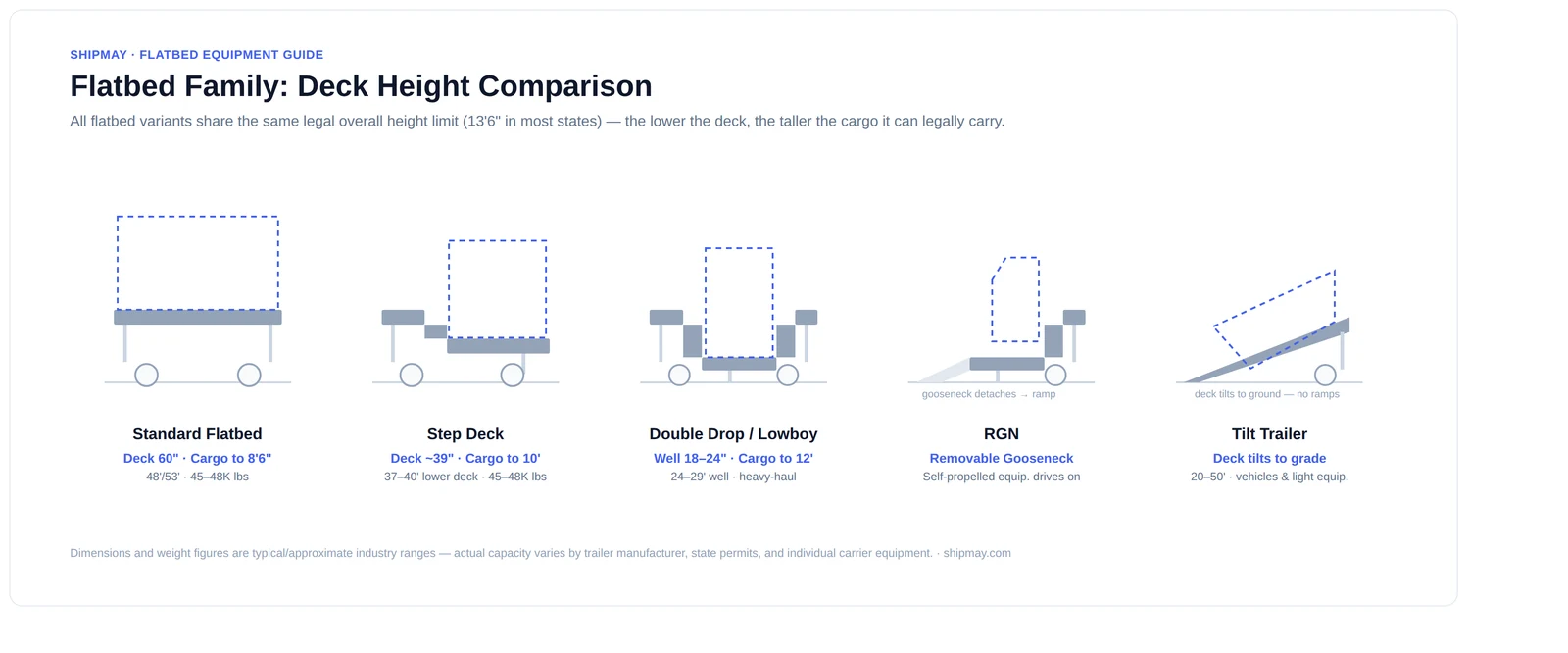
Flatbeds are not one trailer type — they are a family, and the difference between them is almost entirely deck height, because the legal max for a loaded trailer is 13'6" overall in most states. The lower the deck, the taller the cargo it can legally carry.
Standard Flatbed (48' / 53')
- Deck height: approx. 60" (5') off the ground
- Deck length: 48' or 53', width 8'6" (102")
- Max cargo height: approx. 8'6" (to stay under the 13'6" overall legal limit)
- Legal max weight: 80,000 lbs gross combined; typical payload approx. 45,000–48,000 lbs
- Typical cargo: steel coils/beams, lumber, pipe, building materials, machinery and crated equipment that can be loaded from the top or side by crane or forklift
48' vs 53': 53' carries more length but slightly less payload (longer deck, more trailer tare weight); 48' is the more common choice for heavier, denser loads like steel.
Step Deck (Drop Deck)
Two deck levels: a short upper deck near the headboard (~10' long, same ~60" height as a standard flatbed) and a longer, lower main deck (~37'–40') sitting roughly 36"–42" off the ground.
- Max cargo height on lower deck: approx. 10' (vs. 8'6" on a standard flatbed) — about 18" more clearance
- Legal max weight: similar to standard flatbed, approx. 45,000–48,000 lbs typical payload
- Typical cargo: taller machinery, small-to-mid construction equipment, manufactured building modules — anything too tall for a standard flatbed but not tall/heavy enough to need a double drop
Step decks are usually loaded by driving equipment up ramps onto the lower deck, or by crane for non-wheeled cargo.
Double Drop (Double Drop Deck)
Three deck levels: a gooseneck/front deck, a long low "well" in the middle (the lowest point on the trailer, typically 18"–24" off the ground), and a rear deck. The well is what gives this family its clearance advantage.
- Well deck height: approx. 18"–24" off the ground
- Well length: typically 24'–29'
- Max cargo height in the well: approx. 11'6"–12'
- Legal max weight: standard axle configuration approx. 40,000–45,000 lbs typical payload; specialized multi-axle/permitted combinations can legally haul well beyond 80,000 lbs for heavy machinery
- Typical cargo: construction and industrial equipment too tall for a step deck — this is the general category; the two common variants below are built for even heavier, taller, or self-propelled loads
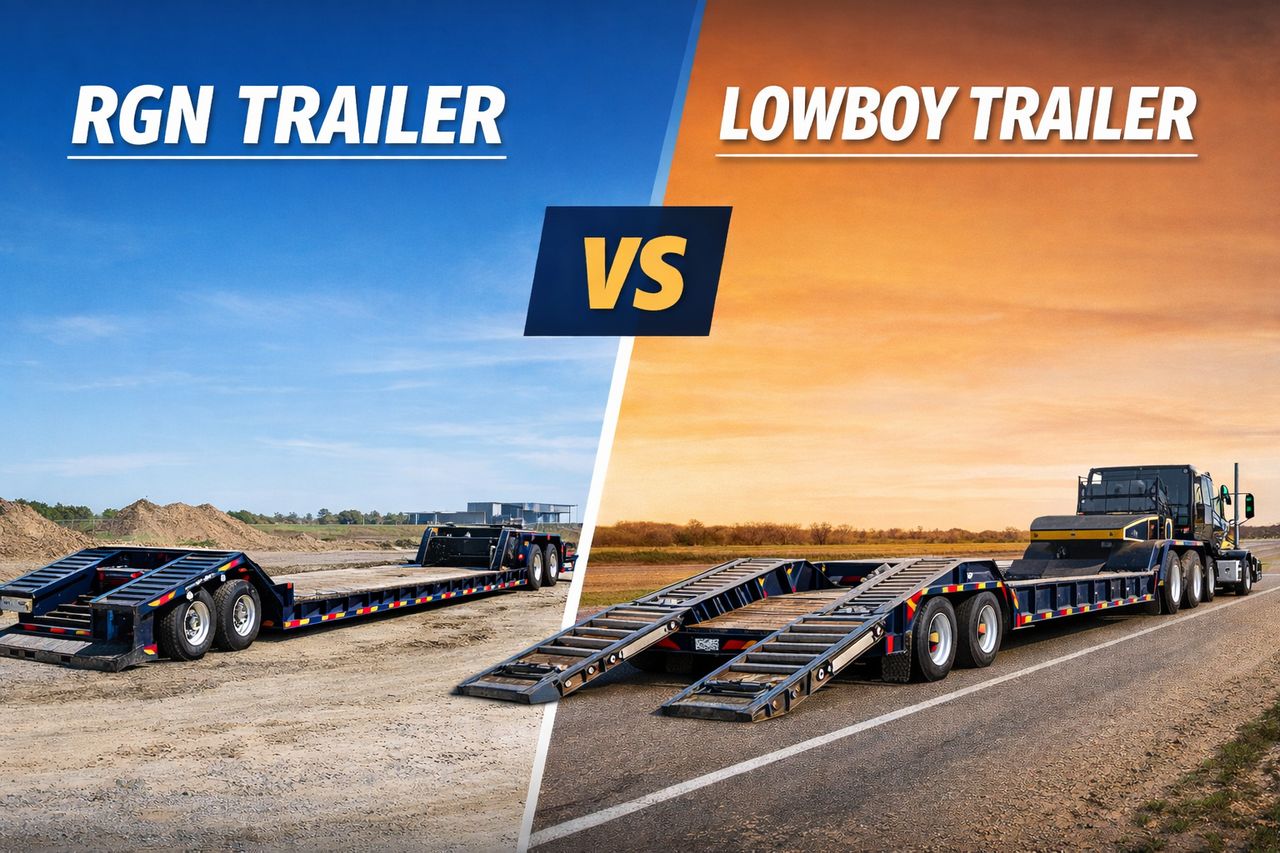
Lowboy
Often used interchangeably with "double drop," but more specifically refers to the heavy-haul end of the family: a fixed-neck double drop built around a very low, reinforced well for the heaviest industrial cargo. Loading is typically by crane, or by ramps for wheeled equipment.
- Typical cargo: excavators, bulldozers, large generators, industrial tanks, oversized/overweight machinery
RGN (Removable Gooseneck)
A double drop where the front gooseneck section detaches and lowers to the ground, turning the whole trailer into a ramp. Equipment that can move under its own power drives straight on — no crane needed.
- Typical cargo: wheeled or tracked self-propelled equipment — excavators, loaders, cranes, agricultural equipment, anything that can drive on and off under its own power
Tilt Trailer (Tilt Deck)
A specialty flatbed where the entire deck hydraulically tilts down to ground level, acting as its own ramp — similar concept to an RGN but lighter-duty and typically used for vehicles rather than heavy industrial equipment.
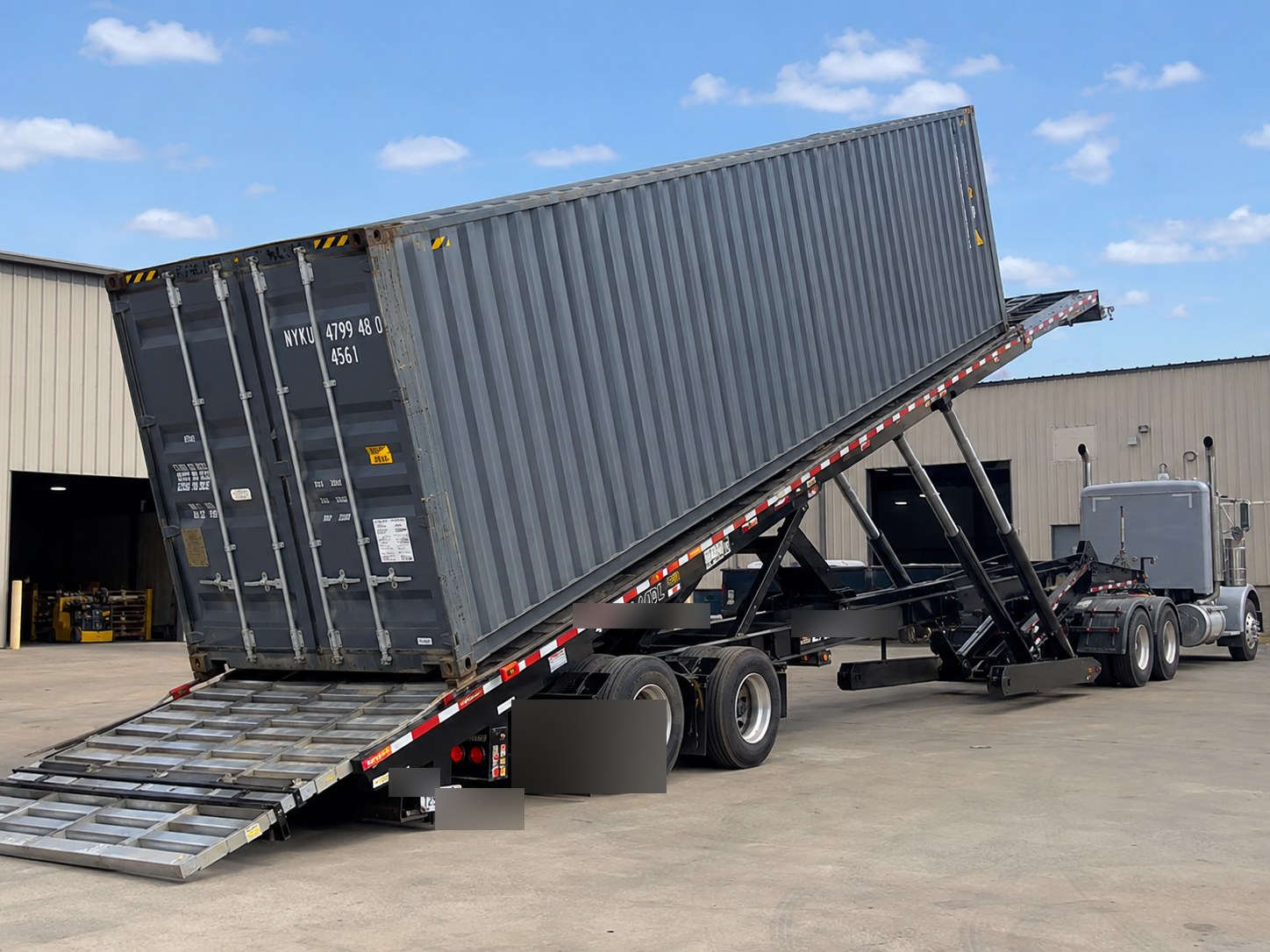
- Deck length: commonly 20'–50' depending on application
- Legal max weight: varies widely by trailer class, commonly 10,000–50,000+ lbs
- Typical cargo: cars and light vehicles, agricultural equipment, smaller construction equipment, and out-of-gauge (OOG) shipping containers that need to be tilted on/off at grade — anything that needs to load without ramps but does not require the heavy-haul capacity of an RGN
Power Only — bring your own trailer
Not a trailer type — a service type. The carrier provides only the tractor (and driver); the shipper or receiver supplies the trailer, already loaded and parked at the dock.
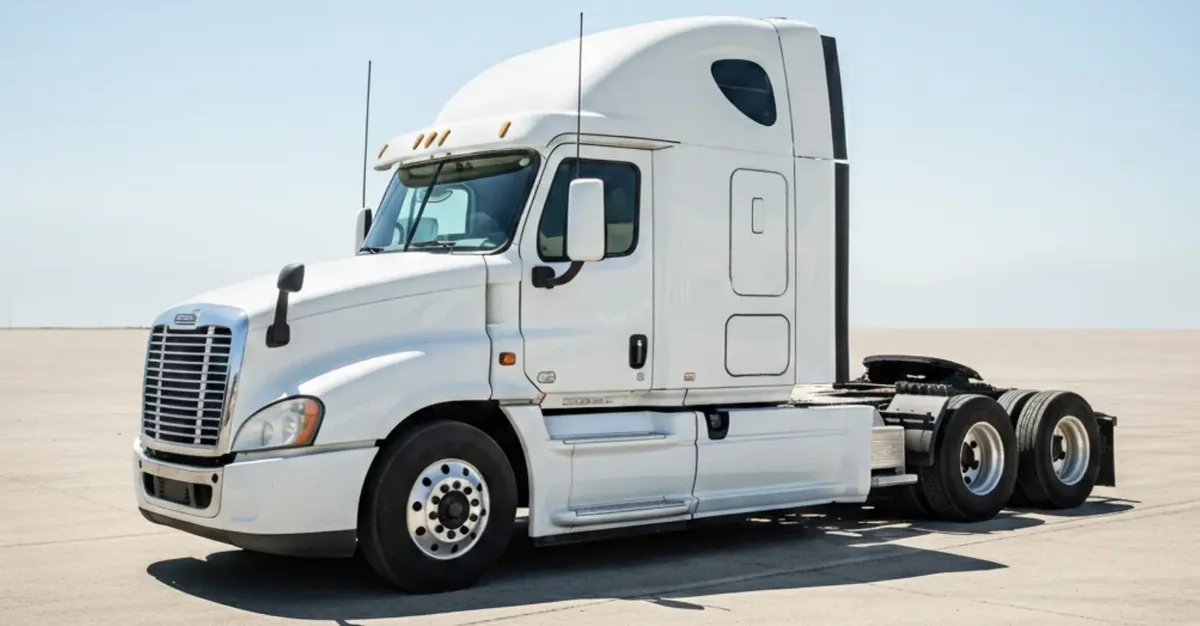
- Capacity: whatever the customer's own trailer is rated for — most often a standard 53' dry van, so roughly the same 44,000–45,000 lbs payload
- Typical use case: drop-and-hook at big-box retail and grocery distribution centers, trailer pool programs, situations where the shipper already owns or leases trailers and just needs the tractor leg
Because there is no trailer to load/unload on the carrier's schedule, power only moves are usually faster to dispatch than a live-load truckload — the trailer is already sitting there, loaded.
Hotshot — smaller loads, faster dispatch
A Class 3–5 pickup truck (e.g., F-350/450/550 or Ram 3500/4500/5500) pulling a bumper-pull or gooseneck trailer, typically 20'–40' flatbed or deckover style.
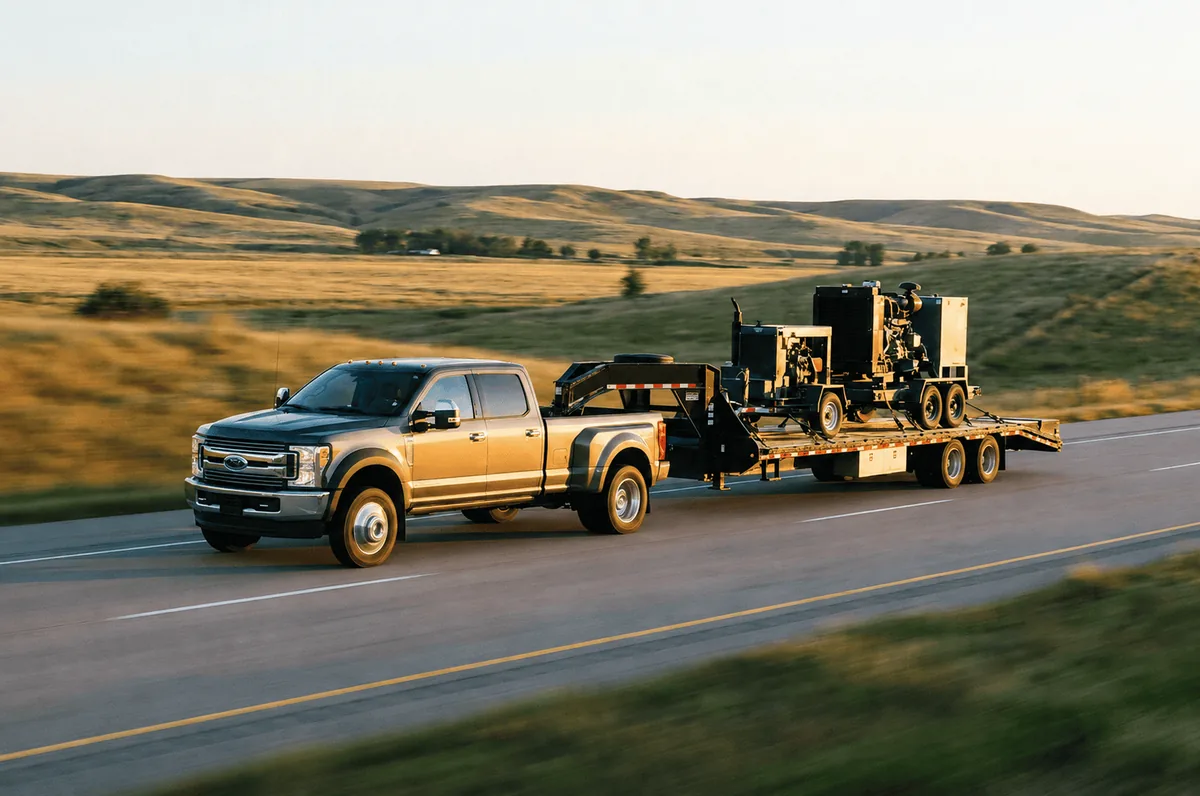
- Combined capacity: many hotshot combos are kept under 26,001 lbs GVWR to stay outside CDL requirements; CDL-rated combos go higher. Typical cargo weight: roughly 10,000–16,500 lbs
- Typical cargo: single pieces of equipment, farm machinery, construction materials for smaller jobsites, time-critical smaller loads, shorter regional lanes
Hotshot is generally faster to source and dispatch than a full-size tractor-trailer for loads that do not need the capacity — useful when the cargo is small but the timeline is tight.
Box Truck + Liftgate — no dock required
A straight truck (no separate tractor — cab and box are one unit), commonly 16'–26' long, often equipped with a liftgate at the rear.
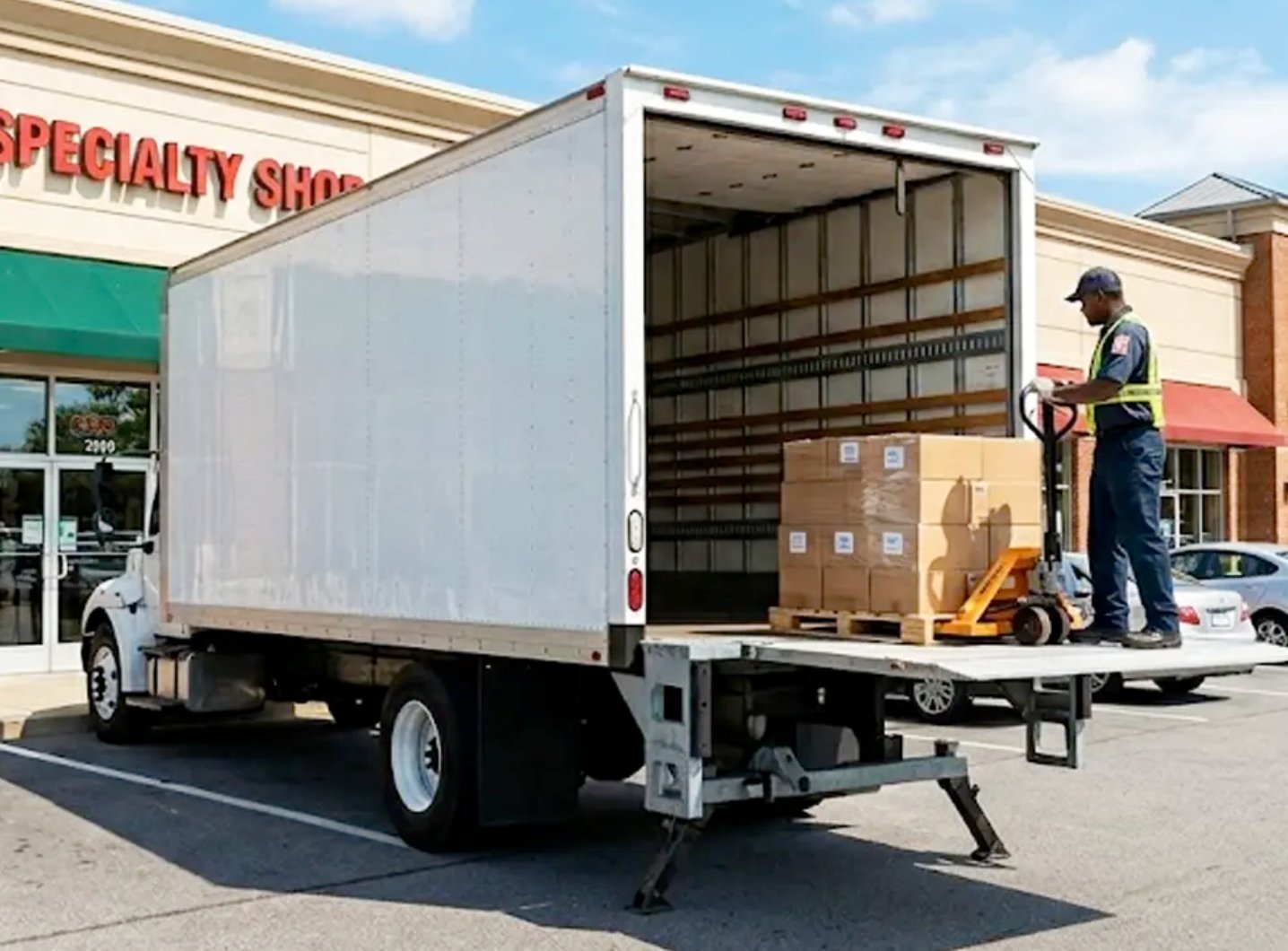
- GVWR: often kept at or under 26,000 lbs to stay outside CDL requirements for the driver
- Typical payload: roughly 7,000–10,000 lbs depending on box length
- Liftgate: a hydraulic platform that raises/lowers cargo to street level — eliminates the need for a loading dock or forklift
- Typical cargo: residential and small commercial deliveries, final-mile, sites with limited access or no dock — the opposite end of the spectrum from a 53' van
Quick reference: which one do I need?
- General dry goods, no height issue: 53' Dry Van
- Needs refrigeration: Reefer
- Loads from the side/top, under 8'6" tall: Standard Flatbed
- Too tall for standard flatbed, under 10': Step Deck
- Too tall for step deck, up to ~12': Double Drop / Lowboy
- Self-propelled equipment that can drive on: RGN or Tilt Trailer
- Shipper/receiver already has a loaded trailer: Power Only
- Small load, tight timeline, shorter lane: Hotshot
- No dock, residential or limited-access site: Box Truck + Liftgate
All dimensions and weight figures above are typical/approximate industry ranges — actual capacity varies by trailer manufacturer, tractor tare weight, state permits, and individual carrier equipment. Always confirm exact specs with your broker before finalizing a load plan.
FAQ