guide
Post-Arrival Delivery: Moving Freight from Port or Warehouse to Final Destination
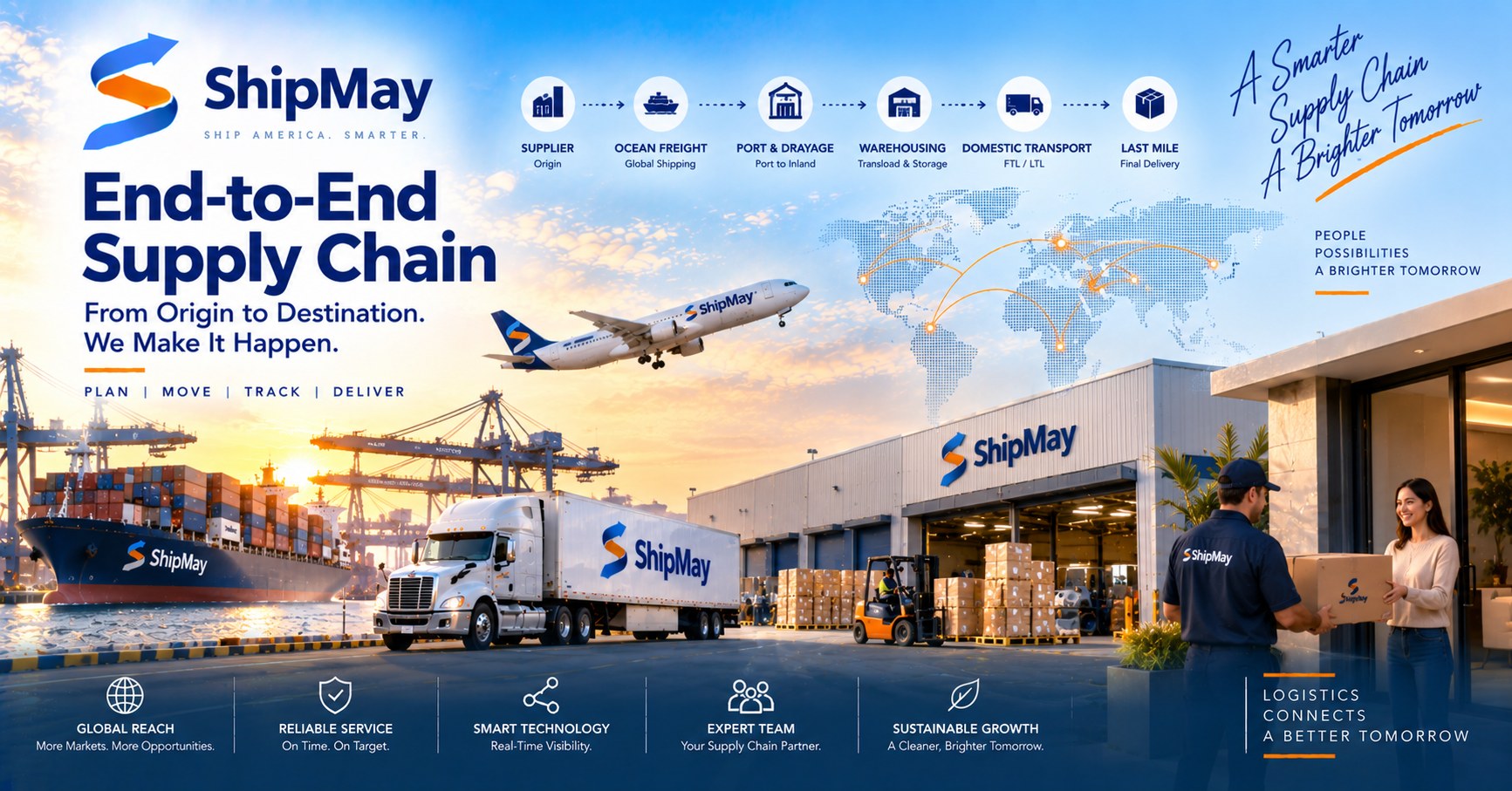
Post-arrival delivery is the U.S. inland freight process that moves imported cargo from a port, rail ramp, warehouse, CFS, or transload facility to its next or final destination. It may include drayage, container unloading, palletizing, LTL, truckload, local delivery, intermodal, or final-mile freight. The right delivery plan depends on where the freight is located, how it is packed, how many destinations are involved, and what the receiver requires. ShipMay helps importers, warehouses, freight forwarders, e-commerce sellers, and project cargo teams coordinate these post-arrival moves in one connected workflow.
Why post-arrival delivery matters
A shipment is not finished when it reaches the port. After arrival, freight still needs to move through U.S. inland logistics. Poor planning can cause extra storage, missed appointments, rework, detention, limited-access fees, or final delivery delays.
Common post-arrival delivery paths
| Path | Best for | Typical next step |
|---|---|---|
| Port to warehouse | Import containers that need unloading or staging | Drayage + transload |
| Warehouse to business | Palletized freight going to a commercial receiver | LTL or truckload |
| Warehouse to multiple destinations | Split shipments or e-commerce distribution | LTL, local delivery, final mile |
| Port or warehouse to job site | Project cargo or appointment-based delivery | Truckload, heavy haul, site delivery |
| Warehouse to local receiver | Same-region deliveries | Local delivery |
What information drives the delivery plan?
- Current freight location
- Final destination or destinations
- Commodity
- Packaging: cartons, pallets, crates, floor-loaded cargo
- Weight and dimensions
- Pallet count or carton count
- Receiver appointment requirements
- Accessorial needs: liftgate, residential, limited access, inside delivery
- Timing and storage constraints
Choosing LTL, truckload, local delivery, or final mile
Use LTL when freight is palletized and does not require a full trailer. Use truckload when volume, timing, security, or special handling requires dedicated capacity. Use local delivery for short-distance moves. Use final-mile freight when delivery requires appointment coordination, limited access, residential delivery, or customer-specific receiving rules.
How ShipMay helps
ShipMay connects post-arrival freight steps from container pickup and warehouse handling to domestic transportation and delivery coordination. Teams can plan the next move with better visibility instead of treating each handoff as a separate problem.
Need help moving freight after it arrives at a U.S. port or warehouse? Prepare the origin, destination, commodity, weight, dimensions, pallet count, and receiver requirements, then start a quote with ShipMay.
Related resources
- Your Cargo Arrived in the US — What Next?
- Drayage Services for U.S. Container Freight
- Transload & Container Deconsolidation
- LTL Freight Quotes & Multi-Carrier Rating
- Truckload Freight Quotes, Solo & Team
- Freight Last-Mile & Local Delivery Quotes
- Local Delivery · Last Mile & Same Day
- Drayage vs Transloading: What Happens After a Container Arrives?
- Container Unloading and Palletizing Guide for U.S. Warehouses
- Los Angeles Drayage Guide: Port Pickup, Warehouse Delivery, and Common Delays
- LTL Freight Quote Checklist
- Freight Accessorial Charges Explained
FAQ