A limited access fee is an extra freight charge that may apply when a pickup or delivery location is harder for a truck to access, requires extra coordination, or does not operate like a standard commercial loading dock. The problem is that the definition is not always the same across carriers, terminals, and delivery situations — which is why this charge so often shows up as a surprise on the final bill instead of the original quote.
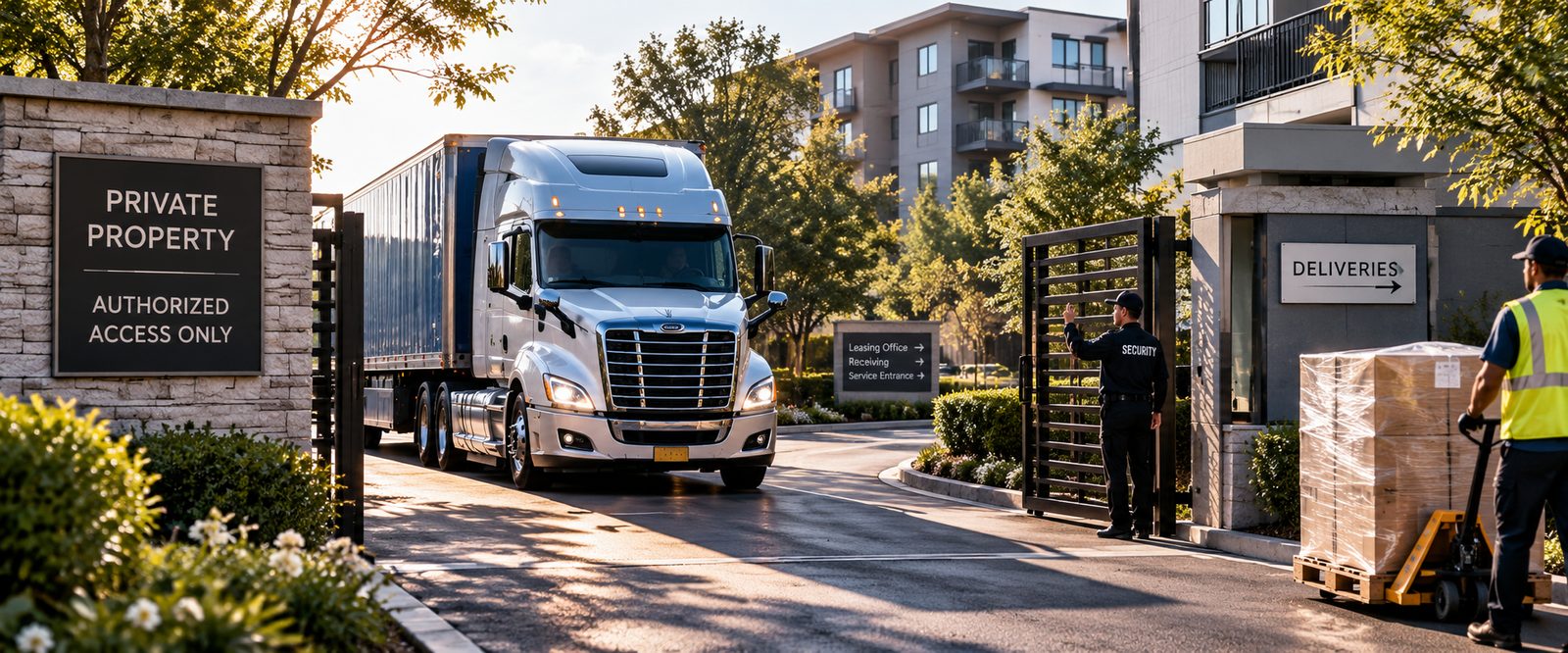
Why limited access fees cause so many billing surprises
Limited access is one of the most common causes of freight bill adjustments. The main reason is simple: there is no single universal standard that every carrier applies in exactly the same way. Different carriers, terminals, dispatch teams, and drivers may evaluate a location differently. Some locations are clearly limited access. Others are not obvious until the truck arrives.
A location may be treated as limited access if it requires:
- Extra time for the driver to enter, check in, or locate the receiving area
- Special access instructions or gate approval
- Delivery outside a normal commercial dock environment
- Appointment scheduling or receiving-hour coordination
- A smaller truck, liftgate, or special equipment
- Driver assistance beyond a standard dock-to-dock delivery
- Extra waiting time or communication with the receiver
This is why limited access fees often appear after delivery instead of during the original quote.
Common locations that may be considered limited access
Carriers may treat many types of locations as limited access, including:
- Schools and universities
- Churches and religious facilities
- Farms, ranches, and rural properties
- Construction sites
- Military bases or government facilities
- Trade shows, convention centers, and event locations
- Storage facilities and mini warehouses / self-storage locations
- Airports, ports, and secured yards
- Residential areas or home-based businesses
- Medical facilities
- Camps, resorts, parks, or remote sites
- Small businesses without a loading dock
- Commercial buildings that require check-in or security access
- Gated business parks or facilities with restricted entry
The important point is that “commercial address” does not always mean “standard freight delivery.” A small business in a shopping plaza, a warehouse inside a restricted yard, or a company located in a residential-style building may still trigger extra accessorial charges.
Trade shows and convention centers need a different kind of planning
Trade shows and convention centers are on the limited access list above, but they do not work like the other examples. A school or a construction site mostly affects how your carrier prices the delivery. A trade show adds a second organization into the picture entirely — and that is where most first-time exhibitors get an unpleasant surprise.
Almost every convention center and trade show uses a designated General Service Contractor (GSC) — companies like Freeman, GES, or Shepard — that controls all material handling on the show floor. In most cases, your freight carrier cannot simply drive up and unload at your booth. Freight has to be handed off to the GSC, who moves it from the dock (or an advance warehouse) to your booth, and moves it back out at the end of the show.
This creates two separate costs that are easy to confuse:
- Freight charges — what ShipMay quotes and books, for moving your shipment from origin to the show’s dock or advance warehouse.
- Material handling / drayage charges — a completely separate fee billed by the show’s GSC for moving freight from the dock to your booth and back. This is usually priced per 100 lbs with a minimum, and it is not included in any LTL or truckload freight quote.
There are also two ways to get freight to a show, and they are priced and scheduled differently:
- Advance shipment to warehouse — freight is sent to the GSC’s advance warehouse days or weeks before the show, then delivered to your booth before move-in. This is usually the lower-cost option and avoids dock congestion on show days.
- Direct to show site — freight is sent straight to the convention center during a specific move-in window set by the show. This is usually billed at a higher rate, and someone from your team often needs to be available to receive and sign for the shipment.
Two more things that catch exhibitors off guard: large shows often route trucks through a marshaling yard first, where drivers wait for a dock time slot — that wait time is outside the show’s control but can still show up on your freight bill as detention. And many shows separately charge for empty crate storage if you want packing crates stored and returned at move-out.
Before booking freight to a trade show, confirm directly with the show organizer or GSC: the exhibitor kit or service manual (which the show provides), the advance warehouse address and deadline, the direct-to-show move-in dates and hours, and the material handling rate. ShipMay can quote and manage the trucking portion of the move, but the material handling fee is a separate charge from the show’s GSC that is not part of any freight quote — plan for it as its own line item.
Limited access vs residential delivery
Limited access and residential delivery are related, but they are not the same. Residential delivery usually refers to a delivery made to a home, apartment, residential neighborhood, or location that carriers classify as residential. Limited access is broader — it can apply to commercial or non-residential locations if the site is harder to access or requires extra handling, coordination, or driver time.
| Situation | Likely charge |
|---|---|
| Home-based business | Residential delivery |
| School | Limited access |
| Construction site | Limited access |
| Warehouse without a dock | Liftgate, possibly limited access |
| Gated commercial facility | Limited access or appointment-related charges |
In real freight billing, these charges can sometimes stack together. A shipment might receive a residential fee, liftgate fee, appointment fee, redelivery fee, or limited access fee depending on the actual delivery conditions.
Why your freight quote may not include the fee upfront
A freight quote is only as accurate as the shipment information provided before booking. If the quote request only includes origin, destination, weight, dimensions, and pallet count, the system may not know whether the delivery location requires special access.
The fee may be missing from the original quote if the shipper did not mention:
- The receiver is a school, church, farm, construction site, or secured facility
- The address has no loading dock
- A liftgate is required
- An appointment is required
- The site has limited receiving hours
- The driver needs to call before delivery
- The truck cannot easily enter the property
- The receiver is in a residential area
- The delivery requires inside delivery or driver assistance
When the carrier discovers these conditions during dispatch or delivery, the final bill may be adjusted.
Real-world examples
A business address inside a restricted property
A shipper sends palletized freight to a company address. The receiver is a real business, but the building is inside a secured facility that requires check-in, gate approval, and escort instructions. The customer sees it as a commercial delivery. The carrier may see it as limited access because the driver cannot complete a normal dock delivery without additional steps.
A small commercial location without a dock
A customer ships a pallet to a small retail store with a front entrance but no loading dock, forklift, or receiving area. The delivery may require a liftgate, extra driver coordination, and more time onsite. Depending on the carrier, this may lead to liftgate, limited access, or other accessorial charges.
A construction site
Construction sites often require special instructions, jobsite contact information, restricted entry, safety rules, and flexible delivery timing. Even if the site has a business name and commercial address, carriers often treat it as limited access.
A school or university
Schools and universities may have security procedures, limited receiving hours, campus routing rules, or restricted dock access. A truck may need extra time to find the receiving location, which can trigger limited access or appointment-related charges.
How to reduce limited access charges
You cannot eliminate every possible freight adjustment, but you can reduce the risk by providing better delivery information before quoting. Before booking, confirm:
- Is the address commercial, residential, or mixed-use?
- What type of facility is it?
- Does the location have a loading dock?
- Is a forklift available?
- Is a liftgate needed?
- Are appointments required?
- What are the receiving hours?
- Is there a gate, guard, call box, or security check-in?
- Can a 53-foot trailer access the site?
- Does the driver need to call before arrival?
- Is inside delivery or driver assistance needed?
- Is the location a school, church, farm, construction site, government facility, event site, or storage facility?
If any of these answers are unclear, it is better to mention them before quoting.
What information should you send when requesting a quote?
To help ShipMay check the risk of limited access or other accessorial charges, send:
- Pickup and delivery address
- Facility type
- Contact name and phone number
- Receiving hours
- Whether an appointment is required
- Whether there is a loading dock or forklift
- Whether liftgate service is needed
- Commodity description, weight, dimensions, and pallet count
- Any special access instructions
The more complete the information, the easier it is to quote the shipment correctly and reduce billing surprises.
Can ShipMay guarantee there will be no limited access fee?
No freight platform or broker can honestly guarantee that a carrier will never apply a limited access fee. Limited access decisions can depend on carrier rules, terminal review, dispatch notes, driver observation, and actual site conditions. What ShipMay can do is help you reduce the risk by checking the shipment details before booking, asking the right questions, and flagging common accessorial risks early. If the delivery location looks like a possible limited access site, it is usually better to include the service in the quote upfront than to be surprised by a bill adjustment later.
Final takeaway
A limited access fee can apply when a pickup or delivery site requires extra time, access, coordination, or handling beyond a standard commercial dock delivery. The definition is not always perfectly consistent across carriers, which is why limited access fees often surprise shippers. Before requesting a freight quote, provide the full address, facility type, dock or forklift status, appointment requirements, receiving hours, and any special access instructions.
ShipMay helps importers, warehouses, freight forwarders, e-commerce sellers, and project cargo teams plan U.S. inland freight with fewer surprises — from drayage and transloading to LTL, truckload, intermodal, and final-mile delivery. If you are unsure whether your pickup or delivery location may be limited access, start a quote with ShipMay and send the details before booking.
Related resources
- Freight Accessorial Charges Explained
- LTL Freight Quote Checklist
- Post-Arrival Delivery: Moving Freight from Port or Warehouse to Final Destination
- LTL Freight Quotes & Multi-Carrier Rating
- Truckload Freight
- Drayage & Port Pickup
- Freight Toolbox
- What Is a Liftgate Fee in LTL Freight?
- Appointment Delivery in Freight Shipping: When Is It Required?